Anxious vs. Avoidant: The 4 Arguments That Destroy Relationships
If you've ever felt like the more you try to get closer to your partner, the more they pull away, you're not imagining it.
One of the most common dynamics I see as a licensed relationship therapist is the anxious-avoidant cycle. One partner craves reassurance and connection, while the other needs space to regulate and process. Neither person is necessarily trying to hurt the other, but without understanding what's happening beneath the surface, the relationship can become stuck in the same painful arguments over and over again.
The good news? These arguments aren't random. They often follow predictable patterns, and once you recognize them, you can begin breaking the cycle.
Here are four of the most common arguments that destroy relationships when anxious and avoidant attachment styles collide.
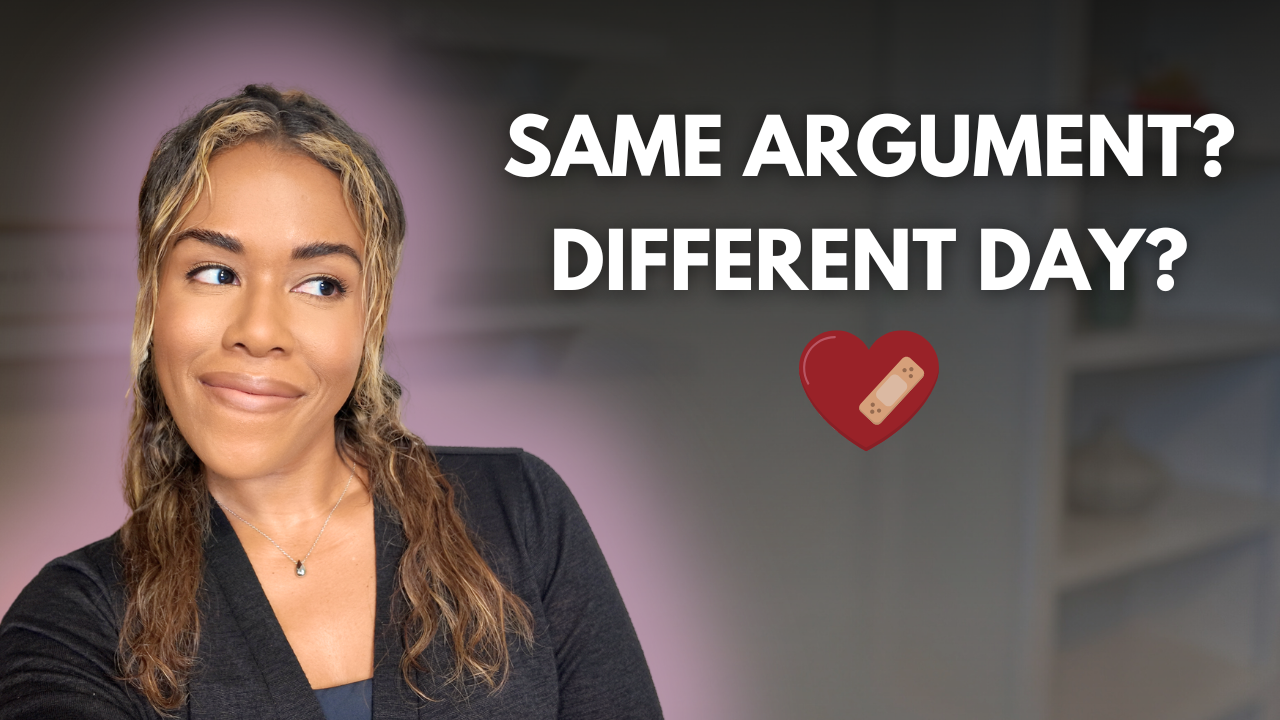
More of a visual learner?
I break all of this down in my latest YouTube video called "Anxious vs Avoidant: The 4 Arguments That Destroy Relationships” — watch it here.
1. "Why Won't You Just Talk to Me?"
For someone with an anxious attachment style, talking through a conflict often feels like the fastest path back to safety.
For someone with an avoidant attachment style, talking immediately after conflict can feel overwhelming. They may need time to think, calm their nervous system, and organize their thoughts before they're ready to engage.
The anxious partner often interprets this as rejection.
The avoidant partner experiences the anxious partner's persistence as pressure.
The result?
The anxious partner pursues harder.
The avoidant partner withdraws further.
Neither person gets what they actually need.
One of the healthiest changes couples can make is agreeing on a specific time to revisit the conversation. Instead of disappearing or demanding immediate resolution, create a plan.
For example:
"I need an hour to calm down, but I promise we'll come back and talk at 7:00 tonight."
That simple agreement creates reassurance for one partner while respecting the needs of the other.
2. "You Never Care About My Feelings."
This argument usually isn't about feelings.
It's about how each partner expresses care.
People with anxious attachment often show love through emotional closeness, frequent communication, and verbal reassurance.
People with avoidant attachment may express love through consistency, practical support, acts of service, or simply being present.
The problem is that each person starts judging love through their own language instead of recognizing how their partner naturally gives it.
An anxious partner may think,
"If you loved me, you'd talk to me more."
An avoidant partner may think,
"I work hard, I show up, and I'm still being told I'm not enough."
Neither partner feels appreciated.
Instead of asking, "Do they love me the way I would?" ask yourself, "How are they already trying to show love that I might be overlooking?"
3. "You're Too Sensitive." "You're Emotionally Cold."
These labels are incredibly damaging.
An anxious partner may genuinely experience emotions more intensely and seek reassurance when they're distressed.
An avoidant partner may regulate emotions internally and become quieter under stress.
Neither response automatically makes someone unhealthy.
Problems arise when we start attacking personality instead of addressing behavior.
Instead of saying,
"You're emotionally unavailable."
Try,
"When we stop talking after an argument, I start feeling disconnected and would really appreciate knowing when we can reconnect."
Notice the difference.
One statement criticizes the person.
The other explains the experience.
That small shift lowers defensiveness and opens the door for healthier communication.
4. "We're Having the Same Fight Over and Over."
This is often the moment couples decide something is fundamentally wrong with their relationship.
In reality, they're usually arguing about the same unmet need.
The anxious partner is asking,
"Can I trust that you'll stay emotionally connected to me?"
The avoidant partner is asking,
"Can I trust that I'll have enough space to be myself without disappointing you?"
Different words.
Same underlying fear.
When couples only focus on the surface-level disagreement, they miss the emotional need driving it.
Once you begin identifying the fear underneath the argument, the conversation becomes much more productive.
The Goal Isn't to Change Your Attachment Style Overnight
One of the biggest misconceptions about attachment styles is that one person has to completely change for the relationship to work.
That's rarely true.
Healthy relationships are built when both partners become more aware of their own patterns and learn how to respond differently.
An anxious partner can practice tolerating uncertainty without immediately assuming the worst.
An avoidant partner can practice offering reassurance before withdrawing for space.
Both partners can learn to regulate their emotions, communicate more clearly, and repair conflict more effectively.
Attachment styles influence relationships, but they don't have to define them.
How Relationship Therapy Can Help
If you and your partner keep having the same arguments without resolution, you're not alone. Many couples become trapped in the anxious-avoidant cycle without realizing that's what's happening.
Relationship therapy provides a safe space to understand these patterns, improve communication, rebuild emotional safety, and strengthen your connection without blaming one another.
At Exhale Counseling Center, I provide online therapy throughout Florida for individuals and couples who want healthier relationships and better communication. Whether you're navigating an anxious attachment style, avoidant attachment, recurring conflict, or emotional disconnection, therapy can help you understand what's happening beneath the surface and create lasting change.
If you're looking for a relationship therapist in Florida, couples therapy in Florida, online couples counseling, or virtual relationship therapy, I'd love to help you take the next step toward a healthier, more secure relationship.
Understanding your attachment style isn't about assigning blame. It's about giving yourself and your relationship the opportunity to grow.
Looking for additional support?
Check out my YouTube channel for real-life strategies you can start using today.
Start Online Therapy with me!