By Dr. Vanessa Milagros, PhD, LMHC
If you had told me years ago that being a therapist would eventually lead to creating videos, working with brands, and building an audience on social media, I probably would've had a few questions.
Yet here we are.
I'm a licensed mental health therapist, a private practice owner, and a content creator. And although those might sound like three completely different careers, they've become connected in ways I didn't necessarily anticipate.
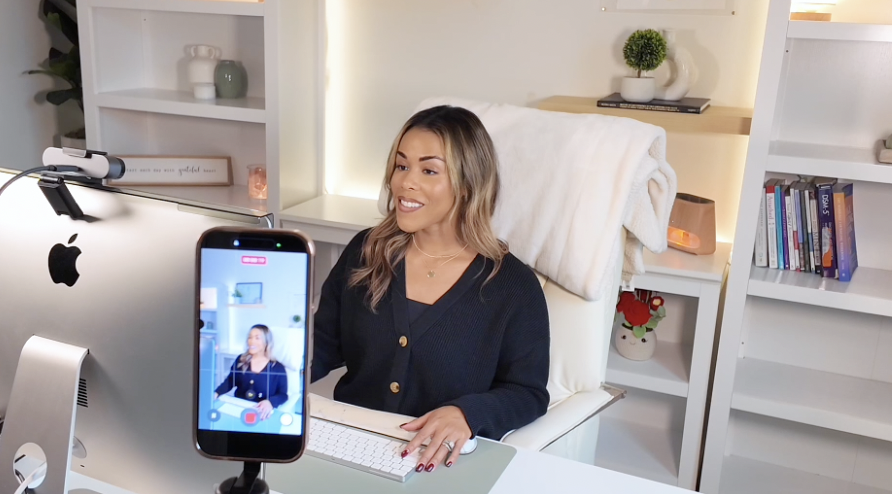
Some days I'm focused on my practice, answering emails, handling the responsibilities that come with owning a business, and preparing for sessions. Other days, I'm brainstorming video ideas, reviewing partnership opportunities, filming content, or figuring out what I want to share with my audience next.
And on plenty of days, I'm doing a little bit of everything.
It's an interesting balance, especially because being a therapist and being a content creator require very different types of energy.
I thought it would be fun to share a little more about this side of my life because, as much as I enjoy talking about relationships and mental health, there's an entire business and creative process happening behind the scenes that people don't always get to see.
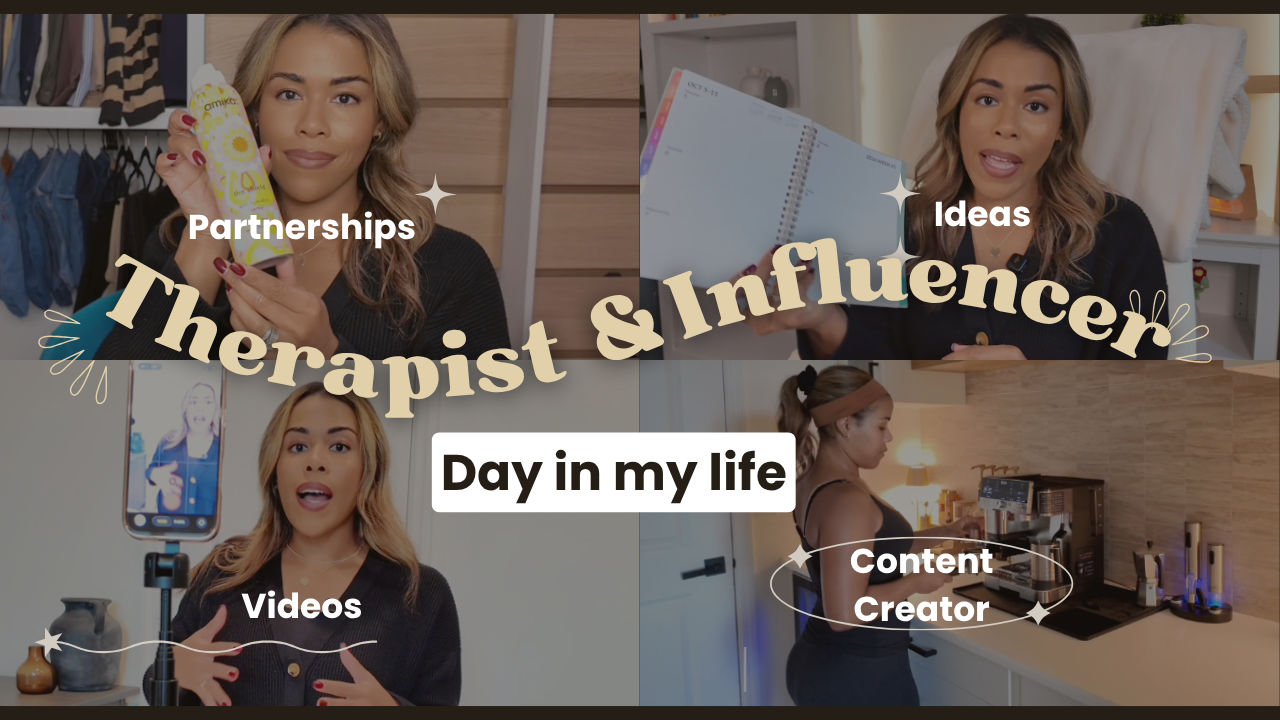
More of a visual learner?
I break all of this down in my latest YouTube video “Therapist + Content Creator: Partnerships | Video Ideas | Day in my life” — watch it here.
Being a Therapist Is Only One Part of My Workday
When people think about a therapist's workday, they probably imagine back-to-back therapy sessions.
And yes, providing therapy is a major part of what I do. But owning a private practice comes with responsibilities that extend well beyond the therapy room.
I founded Exhale Counseling Center because I wanted to build a practice that reflected the kind of work I care about. Relationships, anxiety, emotional well-being, and helping people better understand themselves have always been important parts of my professional identity.
Running a practice also means being a business owner. There are administrative responsibilities, scheduling, documentation, emails, business decisions, and the less glamorous tasks that nobody really talks about.
And because my practice is telehealth-based, much of my work happens from home.
Working from home sounds wonderful, and in many ways it is. I appreciate the flexibility. But I've also learned that when your home is your workplace, it's easy for your workday to extend far beyond what you originally planned.
There's always another email to answer or another project you could be working on.
Then, somewhere in the middle of all that, I might get an idea for a video.
Which brings me to the other side of what I do.
How I Became a Therapist and Content Creator
One thing I've come to appreciate about content creation is how much it allows me to connect with people outside of traditional therapy.
I love being a therapist, but I also enjoy having conversations about the things people experience in their everyday relationships.
Why do we keep choosing emotionally unavailable partners? Why do some people pull away when relationships become serious? Why is it so difficult to stop overthinking a conversation with someone we care about?
These are topics people are genuinely interested in understanding.
And social media has given me a way to make those conversations more accessible.
My content focuses heavily on relationships, attachment styles, emotional patterns, and mental health. But I've also enjoyed sharing parts of my professional journey, what it's like owning a practice, and some of the everyday experiences that come with being a therapist.
Over time, creating content became more than something I did occasionally.
It became another part of my business and professional identity.
I don't think being a therapist means I have to limit myself to talking about therapy all the time. I'm also a woman with interests, experiences, goals, and a life outside of my profession.
And I enjoy being able to show different sides of that.
What a Day in My Life as a Therapist and Content Creator Actually Looks Like
I wish I could tell you that every morning starts with a perfectly organized schedule, a beautiful cup of coffee, and several hours of uninterrupted productivity.
That would be nice.
In reality, my schedule depends on what needs my attention that day.
Some days are more focused on my private practice. Others involve content planning, responding to emails, or working on a brand collaboration.
And then there are those days when I sit down to do one thing, remember three other things I need to finish, and somehow end up working on something completely different.
I'm sure other business owners can relate.
One of the biggest adjustments has been learning how to move between the clinical and creative sides of my work.
As a therapist, I spend a lot of time listening, being present, and thinking carefully about how I communicate.
As a creator, I have to think about storytelling, filming, editing, audience engagement, and whether a video communicates what I actually want it to say.
Those are different skills, but I've found that they complement each other.
My background as a therapist gives me a perspective that influences the content I create. And content creation has challenged me to communicate complicated ideas in ways that feel relatable and easy to understand.
It has also made me much more comfortable being creative.
Something I didn't necessarily expect to become such a big part of my career.
Coming Up With Video Ideas Isn't Always as Easy as It Looks
People sometimes assume that because I talk about relationships and mental health for a living, coming up with content ideas must be easy.
Sometimes it is.
Other times, not so much.
There are days when I have several ideas at once and can't wait to film them. Then there are days when I know I want to create something, but I haven't figured out exactly what I want to say or how I want to approach it.
I've learned that a good topic isn't necessarily enough to make a good video.
The way you tell the story matters.
I might have a psychological concept I want to explain, but I still have to think about how to make it relevant to someone who's scrolling through TikTok or watching YouTube after work.
I don't want my videos to feel like someone is sitting through a lecture.
I want people to recognize themselves in the conversation, learn something, or walk away thinking about a situation a little differently.
That's especially true with relationship content.
People don't always connect with clinical terminology. But they absolutely connect with experiences like feeling anxious when someone doesn't text back, struggling to communicate their needs, or realizing they've repeated the same relationship pattern.
Finding that connection between psychology and everyday life is one of my favorite parts of creating content.
And yes, there are still days when I record something, watch it back, and decide I don't like it.
That's part of the process, too.
Let's Talk About Brand Partnerships
This has been another interesting part of my journey.
When I first started creating mental health content, I wasn't necessarily thinking about all the opportunities that could eventually come from it.
But as my audience grew, I began exploring what it could look like to work with brands.
And I quickly learned that brand partnerships involve much more than filming a video and posting it.
There's researching companies, reaching out to potential partners, developing concepts, negotiating contracts, discussing content usage, and making sure a collaboration actually makes sense for my audience.
Not every opportunity is the right opportunity.
As a licensed therapist, I take that seriously.
I want to work with companies that align with my values, but I also want to create content that feels like something I would genuinely share.
Sometimes that means partnering with companies connected to mental health or professional practice. Other times, it means exploring wellness, travel, lifestyle, or products that fit naturally into my everyday life.
I don't think every collaboration needs to be a direct advertisement for therapy.
People who follow me are interested in relationships and mental health, but they're also people who travel, work, enjoy self-care, buy products, and have interests outside of those topics.
That's part of why I've enjoyed exploring the creator side of my career.
It gives me room to be more creative while still being thoughtful about the companies I choose to work with.
And because content creation is work, I also believe creators should be compensated for the time, planning, expertise, and production that go into a partnership.
There's a lot that happens before a finished video ever appears on someone's screen.
The Part About Being a Content Creator That People Don't Always See
Something I've learned is that content creation can look much easier from the outside.
You see a finished video that might be 60 seconds long.
What you don't see is the time spent coming up with the idea, deciding how to present it, filming, editing, writing captions, reviewing details, and sometimes starting over because the first version just wasn't working.
And then you post it.
Sometimes it performs well.
Sometimes it doesn't.
That's another thing I've had to become comfortable with.
You can put a lot of effort into something and still have no idea how people will respond.
I've also learned that being consistent doesn't have to mean being available every minute of the day.
Between my responsibilities as a therapist, business owner, and creator, I have to be intentional about where my time and energy go.
There are days when I feel incredibly productive, and others when I need to slow down.
I think that's something we should talk about more, especially as professionals who are building businesses while also trying to maintain some kind of personal life.
You can enjoy what you do and still get tired.
You can be grateful for opportunities and still feel overwhelmed by everything on your plate.
Both can be true.
Why I Enjoy Sharing More Than Just Mental Health Content
One thing I want to continue doing is showing more of what life looks like outside of my educational videos.
I love discussing attachment styles and relationship dynamics. Those conversations are important to me, and they're a big part of why people connect with my content.
But I also enjoy sharing the other things I'm working on.
The creative process. Building a business. Traveling. Collaborating with brands. Learning something new. Trying to balance everything without feeling like every single moment needs to be productive.
I think there's value in seeing people as more than their job titles.
Being a therapist is an important part of who I am, but it isn't the only part.
And I hope that by sharing more behind-the-scenes content, I can give people a better understanding of what this journey actually looks like.
Not just the finished videos or the exciting opportunities, but the everyday work that goes into building something of your own.
Come Spend the Day With Me on YouTube
I recently shared a video that gives you a closer look at my life as a therapist and content creator, including the creative and business side of what I do.
If you've ever been curious about how I balance private practice, content creation, video ideas, and brand partnerships, I'd love for you to watch.
Watch: Therapist + Content Creator | Partnerships, Video Ideas & Day in My Life
And while you're there, I'd love to know something.
If you could see more behind-the-scenes content from me, would you be more interested in the therapist side of my life, the content creator side, or how I balance both?
I'm genuinely curious because I enjoy sharing both, and I think there's room for more of these conversations.
Dr. Vanessa Milagros, PhD, LMHC, is a licensed mental health therapist and relationship expert. She is the founder of Exhale Counseling Center, LLC, where she provides telehealth therapy services to Florida residents. Her work focuses on relationships, attachment styles, anxiety, and emotional well-being.
This article is for educational purposes and is not a substitute for individualized mental health care.
Looking for additional support?
Check out my YouTube channel for real-life strategies you can start using today.
Start Online Therapy with me!